solar-cells-roof-with-orange-light-save-power
Home » Powering Growth » Solar Canopies Feasibility Toolkit

Hundreds of thousands of car parking spaces could be harnessed to generate clean power for homes, businesses and public services, with Secretary of State for Energy Security and Net Zero Ed Miliband recently stating:

“Right now, the sun is shining on hundreds of thousands of car parking spaces across the country which could be used to power our homes and businesses.”

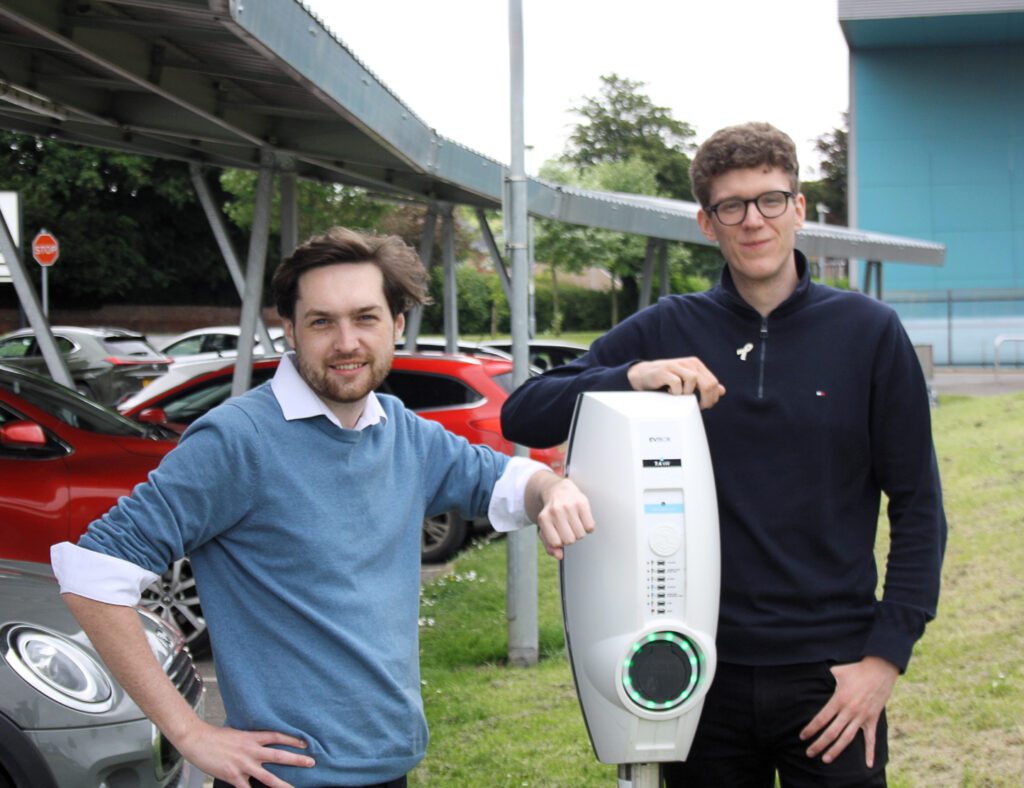
Led by out Tees Valley and Hull and East Yorkshire Regional Project Managers Dani Jackson and Harry Baross, the Hub set out to help our local authorities derisk the development of solar canopies above publicly owned car parks by:

  • Using data driven site prioritisation to identify locations best suited to this technology, and strategically developing a pipeline/aggregated portfolio to unlock economies of scale.
  • Identifying the most appropriate investment model, including:
    • Concession models
    • Power Purchase Agreements (PPAs)
    • Low-cost borrowing for capital investment
  • Using data to find the perfect sites.


The Hub set out to create a tool to test the relative feasibility of publicly owned carparks for solar canopy installation – standardising early‑stage decision‑making, reducing consultancy needs, and building internal low‑carbon development capability.

The toolkit was designed to overcome common barriers such as inconsistent data, limited technical capacity, and uncertainty around financial viability. It enables authorities to:

  • Quickly screen and compare sites
  • Understand technical, financial, and environmental potential
  • Make evidence‑based investment decisions
  • Prioritise projects consistently across the region
Key features
  • Car park inputs (spaces, layout, EV chargers)​
  • Optimisation of array abilities ​
  • Battery storage selector​
  • Grid, export, and PPA tariff assumptions​
  • Funding options and contribution levels​
  • Local supply opportunity assessment​
  • CIBSE‑based demand estimation where data is missing​

Working with industry specialists Scene Connect, we developed an excel toolkit  to help public sector organisations rapidly produce:

  • Site feasibility ranking
  • Solar generation and local supply potential
  • Carbon impact assessment
  • Financial viability metrics
  • Site constraints scoring


The Hub has acted as a resource to investigate complex technologies like solar canopies, support business case development, and reduce both cost and risk in early project stages. This and is helping develop a regional portfolio of future projects, opening the door to investment by pre-proving potential outputs and benefits, delivering:

  • A replicable, user-friendly toolkit that enables local authorities to rapidly assess solar canopy opportunities without specialist expertise.
  • Greater confidence in decision-making, supported by transparent technical, financial, and environmental outputs.
  • A prioritised pipeline of feasible sites, helping the region target investment where benefits are highest.
  • Improved collaboration across local authorities, supported by a shared methodology and common data structure.
  • Stronger strategic planning, with insights feeding into wider low‑carbon and EV charging infrastructure programmes.
  • A foundation for future scaling, with the toolkit adaptable to other regions, estates, or asset types.


Through developing the project we also learned encountered the following challenges:

  • Public car park datasets were inconsistent across local authorities, requiring effort to validate and compile.
  • Each car park presented unique challenges including planning restrictions, grid connection feasibility, and structural limitations.


For more information please contact Danielle.jackson@teesvalley-ca.gov.uk 

Solar Canopies Feasibility Toolkit – Introductory Webinar
Driffield_powering_growth_photograph